They didn’t expect it to work.
Not like this.
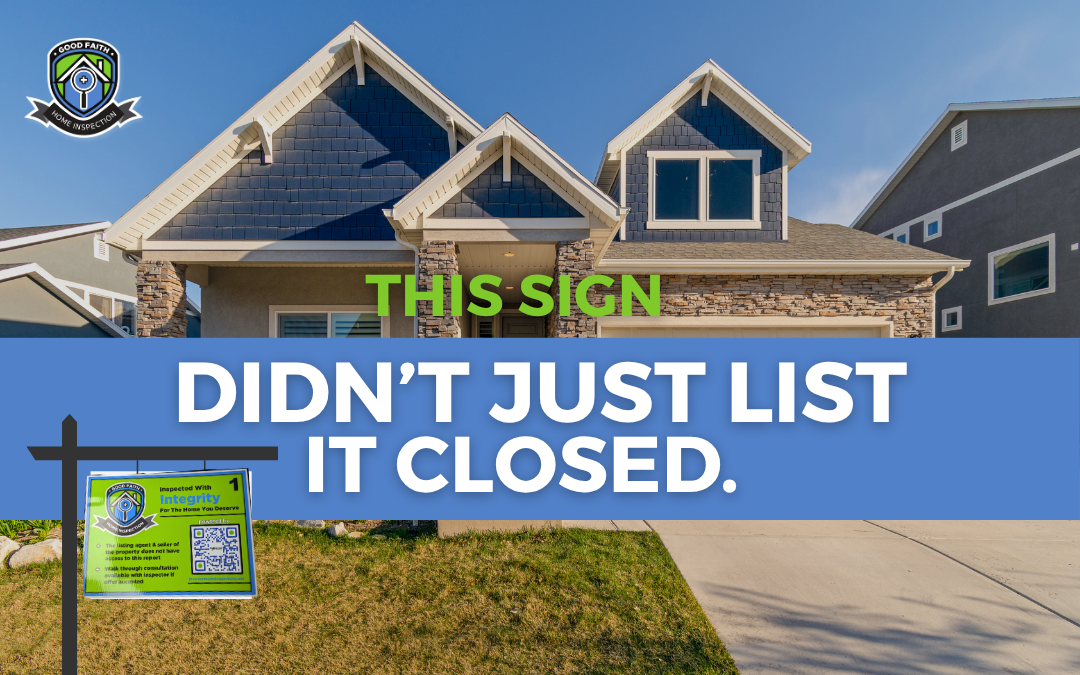
The sign went in the yard like any other. A clean, white QR code anchored to the ground, standing tall in front of a modest 3-bed, 2-bath.
Listing #1.
Nothing flashy. No major upgrades. Just a solid home, priced fairly.
Within 48 hours, three different buyers scanned the sign, viewed the landing page, and purchased the inspection report.
Two submitted offers. One walked away after seeing the HVAC was at the end of its life.
That information didn’t scare the others. It helped them structure better offers. And when the sellers accepted the highest bid, the buyer knew exactly what they were getting into.
No surprises. No re-negotiation. No awkward calls asking, “Why didn’t you catch this?”
The seller never paid a dime for the inspection.
The sign paid for itself.
Listing #2 told a different story.
The home had charm, but it also had some issues in the crawl space. Nothing catastrophic. But enough that only two buyers purchased the report.
Because the minimum number wasn’t met, the seller covered the inspection fee. But they didn’t see it as a loss.
They saw it as protection.
Neither of the two buyers backed out. One was grateful to know what they were walking into and adjusted their offer accordingly. The seller accepted, knowing they wouldn’t be asked for unexpected concessions weeks later. The other buyer didn’t offer, but left a positive review about the transparency.
The listing agent used the success of the sign in their next listing presentation.
That seller said yes before they even finished the pitch.
One builder decided to test it.
New construction. 2,100 square feet. Fresh paint. Stainless appliances. But the crawl space had moisture signs the municipality inspector missed.
So he called us.
We did a full Good Faith Inspection, and the builder purchased the report himself through the QR code to access it.
Then he got to work.
He fixed the grading. Repaired flashing. Added ventilation. Everything was rechecked, rephotographed, and added to the report.
When buyers scanned the sign, they didn’t just see issues.
They saw a builder who cared enough to fix them.
The first buyer said yes. The home closed in 12 days.
But not everyone saw the opportunity.
Another buyer scanned the sign. Loved the house. Loved the idea of knowing what they were getting.
But her agent didn’t see it that way.
“You don’t need to pay for that,” they said. “Let’s wait until we’re under contract. Then we’ll get it inspected.”
She hesitated—but trusted them.
It was a pretty house. The one with the porch she imagined her son swinging on. The one close to her new job. The one she couldn’t stop picturing herself in.
But she waited.
A week later, she checked again—ready to buy the report and write the offer.
Gone.
Under contract.
Someone else had seen the inspection. Someone else made the offer. Someone else got the keys.
And she was left not just without the house—but with a new feeling:
Regret, dressed as silence.
Because sometimes the loudest mistake… is the one you don’t make in time.
The Agent in the Middle
We’ve seen it more than once: a buyer wants to purchase the report. Their agent talks them out of it.
Then a second home shows up.
Similar price. Similar layout. But this one’s already under contract.
The buyer gets frustrated. “Why didn’t we move faster?”
The agent is caught between protocol and progress. Between tradition and transparency.
And somewhere in that tension, the Good Faith Inspection Program does its quiet work:
It reveals who’s ready for the future—and who’s still clinging to the past.
In the End, the Good Faith Inspection Program Doesn’t Just Help Buyers
It helps sellers show strength. It helps agents build trust. It helps builders demonstrate quality. It helps inspectors do the job they were trained to do—without compromise.
But most importantly?
It helps the right people make the right moves at the right time.
Because when you tell the truth first, you don’t have to spin it later.
And the market doesn’t just notice.
It responds.