by Desmond Thornton | Sep 29, 2025 | Home Inspections, Informational Material
When purchasing a home in Tennessee, a home inspection is one of the most important steps in the process. But many buyers ask: what do inspectors actually look for, and which issues really matter? While no house is flawless, knowing the most common Tennessee home inspection issues helps buyers separate minor repairs from major red flags.
At Thornton Home Inspections, we guide Tennessee buyers through inspection reports so they can make confident, informed decisions. Below are the five most frequently noted problems — and what they mean for your purchase.
1. Roofing Problems in Tennessee Homes
From missing shingles to leaks, roofing concerns are among the most common findings in a home inspection.
Why it matters: A compromised roof can lead to water damage, mold, and expensive repairs.
Critical or not? Minor wear may be manageable after closing, but active leaks or structural roof damage often require repairs before the sale can move forward.
2. Electrical System Defects
Outdated wiring, overloaded circuits, or faulty panels are regularly flagged in Tennessee homes, especially older properties.
- Why it matters: Electrical issues pose fire and safety risks and may not meet current code.
- Critical or not? Many issues require immediate attention. While not always a deal breaker, lenders frequently require electrical problems to be corrected before closing for safety compliance.
3. Plumbing and Water Concerns
Leaky faucets, corroded pipes, or poor drainage show up frequently in inspection reports.
- Why it matters: Unchecked plumbing issues can cause hidden water damage and high utility bills.
- Critical or not? Most plumbing issues are repairable and negotiable, but major sewer line damage or persistent leaks could delay or derail a sale.
4. Foundation and Structural Concerns
Cracks in walls, uneven floors, or moisture intrusion around the foundation raise red flags during Tennessee home inspections.
Why it matters: Structural integrity directly affects long-term safety and property value.
Critical or not? Moderate settling is common and usually manageable. However, major foundation movement or instability is often considered a deal breaker until properly addressed.
5. HVAC System Problems
Aging furnaces, non-functioning AC units, or poor maintenance records often appear in Tennessee inspection reports.
- Why it matters: Comfort and energy efficiency depend on a reliable HVAC system.
- Critical or not? Usually negotiable. Buyers may request replacement, repair credits, or warranties, but HVAC issues rarely kill a deal outright.
Which Issues Can Stop a Sale?
Of the five, two stand out as most likely to prevent closing if not resolved:
- Major roofing problems (active leaks or structural damage)
- Significant foundation issues (serious cracks or instability)
The rest — electrical, plumbing, and HVAC — are often negotiable between buyer and seller. With a clear inspection report, buyers can separate deal breakers from normal maintenance concerns.
FAQs About Tennessee Home Inspections
What are the most common Tennessee home inspection issues?
Roofing problems, electrical defects, plumbing issues, foundation concerns, and HVAC problems are the top five.
Do sellers have to fix inspection issues in Tennessee?
Not always. Many repairs are negotiable, but safety or lender-required items may need to be addressed before closing.
How can buyers prepare for a home inspection?
Work with a licensed Tennessee inspector, review sample reports ahead of time, and budget for possible repair negotiations.
A professional inspection isn’t about passing or failing a house — it’s about understanding what you’re buying. By knowing the most common Tennessee home inspection issues, buyers can negotiate repairs with confidence and avoid costly surprises after closing.
Thornton Home Inspections gives Tennessee buyers peace of mind before signing on the dotted line. Don’t let hidden issues derail your home purchase.
Schedule your Tennessee home inspection today.
by Desmond Thornton | Sep 13, 2025 | Home Inspections, Informational Material
Why Home Inspection Reports Can Derail Sales
It’s one of the most frustrating truths in real estate: deals fall apart after the inspection.
According to Redfin, nearly 15% of pending home sales fell through in May 2025—the highest cancellation rate ever recorded for that month. A Business Insider analysis found the same pattern in July: over 15% of purchase agreements collapsed, the highest level since 2017.
Yes, mortgage rates and affordability pressures are part of the story. But in many cases, the real deal-breaker is the home inspection report.
Here’s the problem: buyers make offers in the dark. Then the inspection reveals costly repairs, outdated systems, or hidden risks. Excitement quickly turns into hesitation, often ending in withdrawal. The result? Weeks of wasted time, broken contracts, and lost trust.
The Limits of Traditional Pre-Listing Inspections
Some sellers and builders try to get ahead by ordering pre-listing inspections. But these come with built-in flaws:
- The seller sees the report, which makes buyers doubt its neutrality.
- Most buyers still order their own inspection, adding redundancy, delays, and extra cost.
- Sellers resent paying inspection fees upfront, with no guarantee of recovery.
Instead of creating clarity, the old model creates more questions than answers.
How the Good Faith Inspection Program Builds Buyer Trust
The Good Faith Inspection Program (GFIP) reimagines how inspection data is delivered. Instead of hiding behind fine print or pushing costs forward, GFIP puts truth first:
- Inspection First, No Upfront Cost: Homes are inspected before they hit the market. Builders and sellers pay nothing upfront.
- Buyer Access via QR Code: A sign at the property lets buyers scan and instantly purchase the discounted inspection report.
- Refund Option for Sellers: If three or more buyers buy the report, the seller is refunded in full.
- No Report Sharing with Seller or Builder: The inspector’s findings go directly to buyers—ensuring objectivity and transparency.
This approach transforms the home inspection report from a deal-breaker into a deal-builder.
Who Benefits from Transparent Inspections?
For Buyers
- Review the inspection report before making an offer
- Avoid costly surprises after signing
- Negotiate with confidence.
For Sellers & Builders
- Protect reputation with full transparency
- Reduce deal fallout and lowball offers.
- Pay nothing upfront—and possibly nothing at all.
For Agents
- Spend less time rescuing contracts.
- Present cleaner, stronger offers.
- Position yourself as a consumer-first advisor.
The Future of Real Estate Transactions: Truth Over Trust
In today’s market, promises aren’t enough. Buyers don’t want fine print—they want proof.
A home inspection report shouldn’t arrive as a shock weeks into the process. It should be the foundation of informed, confident negotiations. The Good Faith Inspection Program makes that shift possible by delivering unbiased data to buyers first.
Truth builds stronger deals. GFIP makes it possible.
by Desmond Thornton | Aug 29, 2025 | Home Inspections, Informational Material
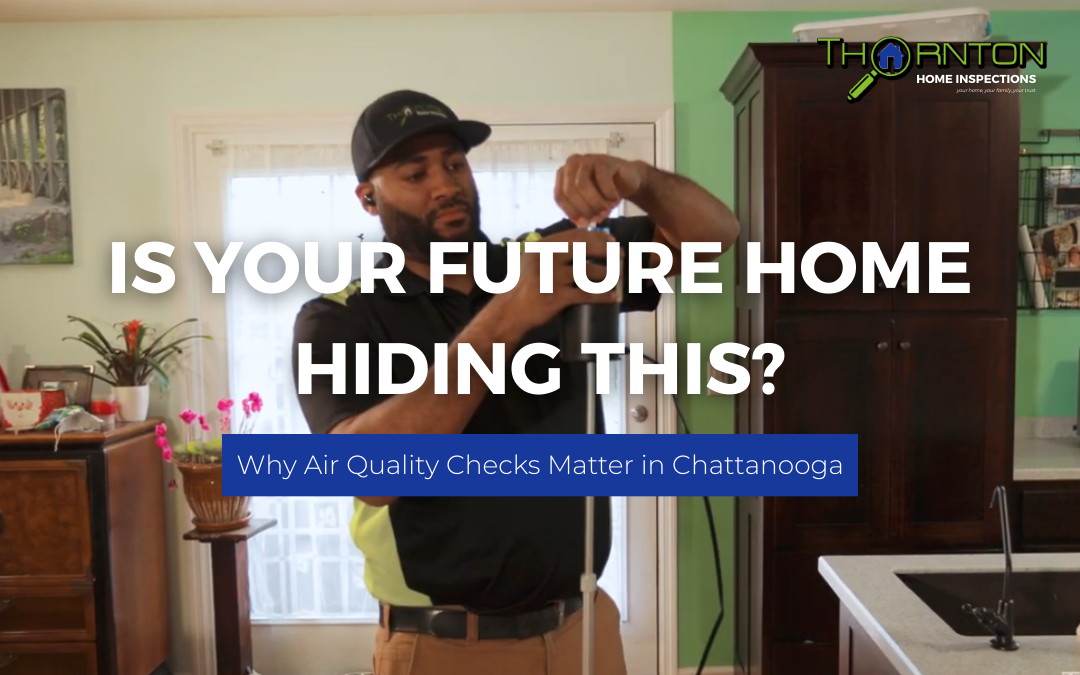
When buying a home in Chattanooga, most buyers focus on the obvious inspection points — the roof, foundation, plumbing, and electrical systems. But one area often overlooked is the air you’ll be breathing once you move in. An air quality check in home is an optional add-on to a standard inspection that can uncover hidden risks and give you confidence in your purchase.
What Is an Air Quality Test?
An air quality test evaluates the indoor environment for pollutants that aren’t always visible. Inspectors may take samples of air and surfaces to detect common issues like:
Mold spores — often linked to moisture problems.
Volatile Organic Compounds (VOCs) — chemicals released from building materials, paints, or cleaning products.
Radon — a naturally occurring radioactive gas known to increase cancer risks.
Pollen and allergens — common in Chattanooga due to high seasonal pollen counts.
The goal of testing is to identify contaminants that could impact your family’s health before you finalize your purchase.
Why It Matters in Chattanooga
Chattanooga’s environment brings unique air quality concerns. The city is in a valley, which can trap air pollutants, and it ranks high nationally for pollen and seasonal allergies. High humidity levels also increase the risk of mold growth in basements, crawlspaces, and poorly ventilated homes. According to the EPA, Tennessee is considered a zone of concern for radon, making testing particularly valuable in this region.
By including an air quality check in home during your inspection, you can detect issues tied specifically to Chattanooga’s climate and geography.
When Should Buyers Consider It?
Not every buyer will need an air quality test, but it’s especially useful if:
- You or your family members have asthma, allergies, or respiratory sensitivities.
- The home has a history of flooding, water damage, or musty odors.
- The property is older and may have outdated materials.
- You want extra assurance about the long-term livability of the space.
While a standard home inspection covers visible defects, it cannot confirm what’s in the air. An air quality check in home fills that gap.
How the Process Works
Air quality testing usually involves placing monitoring equipment inside the home or collecting samples for lab analysis. The results can take anywhere from 24 hours to a few days, depending on the type of test. Your inspector will provide a report detailing the findings and possible next steps, such as remediation if elevated mold spores or radon are detected.
Key Takeaway
For Chattanooga homebuyers, an air quality check in home provides peace of mind that goes beyond the basics of a standard inspection. With the region’s unique challenges—pollen, humidity, and radon exposure—this optional step can reveal hidden risks and help ensure your new home is safe and comfortable for years to come.
by Desmond Thornton | Jul 29, 2025 | Informational Material
You’re told it’s covered — until you need it. Then the clauses start to speak louder than the promises.
Welcome to the world of guarantees, warranties, and insurance contracts: where peace of mind often has footnotes you never read.
This entry in the Consumer Clarity series unpacks the illusion of coverage in real estate, from builder warranties to aftermarket home protections — and how consumers can navigate the murky waters between trust and truth.
New Construction: Peace of Mind… in Pieces
Most new homes come with a builder’s warranty — commonly referred to as a 1–2–10 plan: one year on workmanship, two on systems, and ten on structure. On paper, that sounds strong. In practice, it depends heavily on who built your home and how they interpret their responsibilities.
Some reputable builders go above and beyond. But many stick to the bare minimum — and some let cosmetic or functional issues “expire” before addressing them, arguing that problems weren’t reported within the correct window.
This leads to one of the first disillusions of homeownership:
Just because something went wrong doesn’t mean the warranty agrees with you about when.
And because most homeowners aren’t trained to spot early signs of failure, issues often go unreported until they become costly — or are denied for being “too late.”
The Pre-Owned Home Warranty Pitch
Home warranties offered during resale transactions sound comforting. They’re marketed as a catch-all for aging systems and surprise breakdowns. But here’s the tension:
Many of these policies are strictly limited in scope, and unless you’ve read the exclusions line by line, the moment you file a claim could become the moment you learn what isn’t covered.
Pre-existing conditions? Not covered.
Improper maintenance (even unknowingly)? Not covered.
Replacement value? Often only partial or prorated.
Take HVAC systems, for example: a failed compressor might be replaced, but the rest of the unit — including ductwork or refrigerant upgrades — might fall outside the warranty’s language.
This doesn’t mean home warranties are scams — but it does mean they’re not magic wands.
The core issue isn’t that the warranty lied — it’s that the buyer trusted the promise more than they read the print.
Why Some Agents Stay Quiet — and Others Don’t
You might’ve noticed something strange: some real estate agents strongly recommend home warranties. Others avoid mentioning them at all.
Why the difference?
For some, it’s about keeping deals alive — giving buyers peace of mind to close confidently. For others, it’s about avoiding liability. If a warranty fails to deliver, the buyer may blame the person who recommended it.
While kickbacks for referrals are illegal under RESPA, there are still gray areas in vendor relationships, especially when it comes to “preferred” providers or sponsored marketing.
This doesn’t mean bad intent — but it does mean the ecosystem isn’t always neutral.
In short: if no one is explaining the warranty to you, it might be because they don’t want to be the one blamed when it doesn’t work.
How Home Inspectors Should Handle It
Home inspectors walk a fine line. We’re trained to speak the truth about what we see — not about what a third-party policy may or may not do.
So we often say things like:
“This unit is older, but functional today.”
“A home warranty may be worth considering — just be sure it covers full replacement, not just repair.”
We are not supposed to endorse specific companies, nor are we supposed to give legal advice on coverage. But we can and should educate buyers on what they might face post-closing — especially if large systems are aging.
And yes, some inspection companies do receive compensation for warranty tie-ins. That’s not inherently wrong — as long as it’s disclosed. But that makes clarity even more important.
A good inspector will arm you with insight — not assumptions.
What Should “Guaranteed” Really Mean?
Here’s a better definition:
Inclusion, not exclusion.
Transparency, not loopholes.
The consumer’s interest, not the insurer’s incentive.
There are companies out there trying to do it right. But they often get priced out — because consumers don’t always reward integrity. They reward with price.
So before you buy into a guarantee, ask yourself:
Do I really understand what’s being promised — or just hoping for peace of mind?

by Desmond Thornton | Jul 22, 2025 | Informational Material
The Home Warranty Illusion
Home warranties are sold as peace of mind. But when something breaks—especially something major—they often introduce more frustration than relief.
You think you’re protected… until the fine print starts talking.
This isn’t just about shady companies. It’s about how we think protection works—and the gap between the perception and the reality.
Why Inspectors Stay Quiet
In many real estate circles, inspectors are quietly discouraged from discussing home warranties at all. Not because they aren’t important—but because they’re unpredictable. Recommend one that fails, and it reflects on you. Criticize one, and you risk upsetting the agent.
I’ve seen both.
I once cautioned a buyer about aging HVAC systems and suggested a home warranty—not as a fix, but as a buffer. The agent called me later, upset that I’d “stepped outside my lane.” And yet, younger agents today often recommend warranties themselves as deal-saving tools.
So why the shift?
The uncomfortable truth is this: sometimes, it’s not about the client—it’s about the commission. In some circles, warranties are just another checkbox to close the deal.
What’s Actually Covered?
This is the part many buyers don’t realize:
Most home warranties don’t fully replace broken systems. They offer pro-rated reimbursements, patchwork repairs, or deny claims entirely based on “pre-existing conditions.”
That means your AC could die a month after closing—and you still pay thousands out of pocket.
It’s not always malicious. These are contracts, and they’re written with precision. But that precision usually favors the company, not the consumer.
Used as Leverage, Not Safety
For some agents, warranties serve as a safety net—“We’ll buy you a year of coverage in case anything comes up.” But unless buyers understand what’s not included, it can create a false sense of protection.
And that false confidence creates problems:
Buyers delay critical repairs, assuming they’re covered.
Claims get denied for technicalities.
Frustration builds—at the inspector, the agent, the process.
The Real Danger: Assumption
Warranties aren’t inherently bad. Some offer great value, especially for low-cost repairs or minor system failures. The problem isn’t the product—it’s the assumption of safety.
When buyers believe the warranty will “cover everything,” they stop asking the right questions.
And that’s where the harm happens. Not in the denial—but in the delay, the shock, and the misaligned expectations.
What We Recommend
Do your research before accepting any home warranty.
Ask for full policy documents, not just a brochure.
Clarify replacement vs. repair and what counts as pre-existing.
Never rely on a warranty to fix what your inspection already flagged.
As a home inspector, I don’t profit from what you choose. But I’ve seen what happens when good people get caught off guard. I’d rather warn you today than hear your frustration tomorrow.
Truth Over Trust. Always.
Because in the end, peace of mind doesn’t come from paperwork. It comes from knowing what’s real—and being prepared when it’s not.
by Desmond Thornton | Jul 15, 2025 | Home Inspections, Informational Material
When you buy a home, you’re told you’re “covered.” But what happens when you’re not? This is the truth behind what too many homeowners discover too late: coverage is a concept, not a guarantee.
This is not just a story about insurance. It’s a mirror held up to a system built more to protect itself than the people who fund it. And it begins with a collapse.
The Collapse That Started It All
A friend called me about a collapsed front porch. Not from a storm. Not from an earthquake. From time.
The home was built in 1999. The porch was load-bearing—supporting the front structural wall of the home. But the blocks beneath it were turned horizontally, cores facing out. That orientation is structurally incorrect. These CMUs (cinder blocks) were designed to carry load vertically. Laying them sideways created a ticking time bomb.
Add to that: there was no proper footer or support wall. The slab floated, unsupported, for over two decades. And beneath it? Construction debris. Trapped moisture. Hidden weakness.
Eventually, the inevitable happened. It cracked. It sagged. It fell.
The homeowner had no idea this space existed. The area was sealed off during the original build. It wasn’t visible, even to a home inspector.
He filed an insurance claim. The first answer was no. The second was: prove it.
He brought in someone. Then someone else. Eventually, the issue got escalated high enough to be considered for full replacement. And only then did I get involved—advising a structural engineer be brought in immediately.
What the Evidence Shows
Structural Misuse of CMU (Cinder Blocks)
The blocks were laid horizontally (cores facing out), which is incorrect for load-bearing support. This reduces their ability to distribute weight and makes them prone to failure over time—especially with no reinforcement.
Lack of Footer or Substructure Support
There was no visible evidence of a proper footing or secondary support wall beneath the slab. A floating slab without support will shift, sink, or fail entirely. That’s exactly what happened.
Concealed Construction Debris
The void beneath the slab was filled with leftover debris from the original construction—a moisture trap that led to rot, fungus, and accelerated material failure.
Brick Veneer Separation
Photos showed bulging and shear cracking of the brick veneer—a clear indicator of differential settlement and structural instability.
Insurance: Designed for Delay?
Here’s what makes this worse: this homeowner had paid for insurance, faithfully. He had never made a claim. But when the need finally came, he had to jump through hoops just to be heard.
This isn’t rare. It’s increasingly the norm.
The system seems designed for denial first. Delay second. Maybe payout third. Maybe.
“We think we’re paying for protection, but often we’re just funding someone else’s risk calculations.”
What if you had put that same money in a personal account? Let it gain interest? Let it serve you, not someone else’s shareholders?
That’s not insurance. That’s financial clarity. But most people aren’t taught that option exists.
The Real Game: Be the House
When I first heard the phrase “be the house,” I thought of casinos. The house always wins.
And then I realized: that’s insurance. That’s why they litigate. Stall. Obfuscate. It isn’t personal. It’s probability. The system is rigged to favor the one setting the rules.
If you aren’t the house, you’re the bet.
“If you’re not the house, you lose.”
That doesn’t mean everyone working in insurance is corrupt. But it does mean the system itself isn’t built to say yes easily. And that needs to change.
Final Thoughts
This isn’t about blame. It’s about awareness. The collapse of that porch wasn’t caused by bad luck. It was caused by a series of shortcuts, cover-ups, and blind spots that eventually reached their limit.
Insurance failed. Construction failed. Visibility failed.
And that failure could have been deadly.
So what’s the solution?
Better construction oversight.
Structural transparency.
A new consumer model of accountability.
This is just the beginning of Consumer Clarity. And we’re just getting started.
Next Up: Home Warranties: The Promises That Expire Before the Appliance Does.